Anna Wetherell
The LuminariesAnna Wetherell’s story moves through several kinds of uncertainty: the cause of her collapse, the gold hidden in her clothing, Emery Staines’s disappearance, and the authority of a deed that might transform her fortune. Known in Hokitika as a sex worker and sometimes by the local nickname Chinaman’s Ann, she is repeatedly treated as a subject of rumor or a stake in other people’s plans. Yet her insistence that she has left that work, her account of her relationship with Staines, and her later attempt to claim what he promised give her a voice in a plot where knowledge and control are unevenly distributed.
Identity and Work
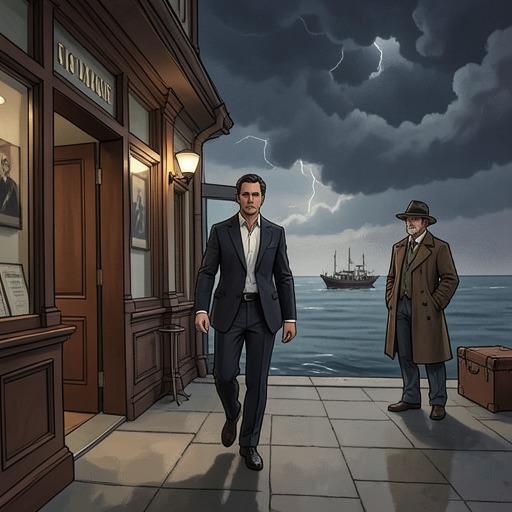
Anna arrives in Hokitika aboard the Godspeed, where she stands alone on deck as the vessel crosses the bar. The town appears smaller and more exposed than she expected, in sharp contrast with Dunedin’s sheltered harbor. In Hokitika she works for Dick Mannering, initially wearing a rented purple working gown. Her familiarity with Kaniere Chinatown gives her the nickname Chinaman’s Ann: the label marks her association with the district and affects how different people regard her, while reducing her identity to the work and setting through which they know her.
Her livelihood makes her visible to men who talk about her in terms of business, reputation, or desire. Mannering calls her his best worker and resents her withdrawal from work as a loss to him. That language contrasts with Anna’s own later insistence that she is no longer for sale. The shift is not simply a change of employer or residence: it is a refusal of the category through which Mannering has understood her and profited from her labor.
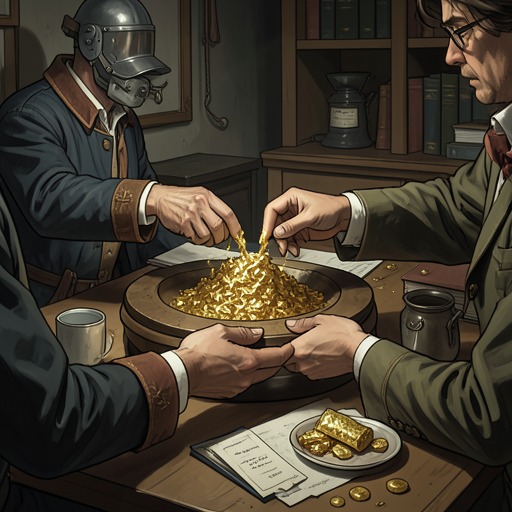
Before that break, Anna purchases all five dresses from a trunk salvaged from a wreck. The dresses become central to the novel’s gold mystery, though the evidence does not establish what she knows about their contents when she buys them. After she is found unconscious, Aubert Gascoigne suspects that someone waited for her to smoke and then sewed gold into her dress while she could not know what was being done. Edgar Clinch later discovers pure gold concealed in the seam of a muslin dress, finding the fabric unexpectedly heavy and drawing gold dust from its hem. The garments thus carry both the material trace of a concealed scheme and the unresolved question of Anna’s knowledge of it.
Collapse, Arrest, and Opium
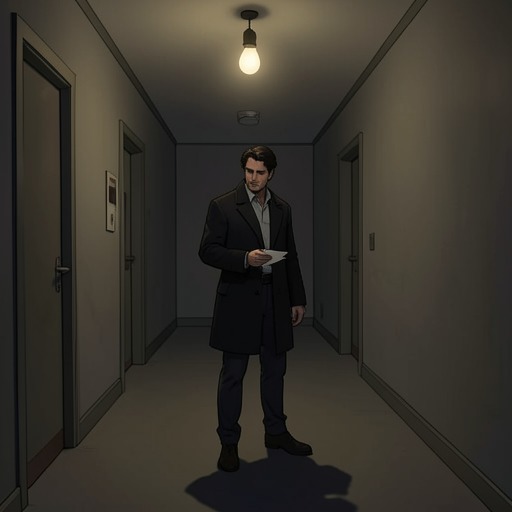
On the afternoon of 14 January, Anna smokes opium and then falls asleep. Her next memory is waking in gaol. The authorities find her insensible and cannot determine whether her condition resulted from severe intoxication or deliberate self-harm; they arrest and detain her on that uncertainty. The instrument is believed to have been opium, but the circumstances remain disputed rather than settled by Anna’s account.
When Joseph Pritchard later asks about the incident, Anna says she had intended to smoke as usual, not to harm herself, and had no memory of what happened between falling asleep and arriving in gaol. She rejects both the attempted-suicide allegation and the suspicion of poison. Pritchard believes her denial, yet he is also convinced that the event may involve a dose given against her will or an altered supply. He tries to obtain the remaining opium resin from Ah Sook for examination, but Ah Sook refuses to cooperate and ends his business with the chemist. Pritchard’s professional concern is mixed with personal frustration that Anna did not seek his advice herself.
Anna’s detention also exposes how the charge is entangled with poverty and procedure. When Aubert Gascoigne encounters her shackled on the floor of the gaol-house, she tells him she can raise bail but asks him not to disclose how. Later, feverish and humiliated, she produces coins hidden in her clothing and pays the required sum. George Shepard is then obliged to release her. At the subsequent Magistrate’s Court hearing, she declines to plead and pays the fine. Her ability to secure release depends on money she has managed to keep, not on the authorities resolving what happened to her.
The episode remains a source of disagreement among those around her. Ah Sook had regarded Anna as a favorite companion at the Kaniere opium den, and news of her near-death distresses him. Pritchard refuses to believe she intended suicide, while Anna herself insists that she did not. The lost interval in her memory leaves room for suspicion, but it does not establish who, if anyone, acted against her.
Staines, Mourning, and the Hidden Fortune
The night before her collapse, Anna had been with Emery Staines. A deed dated 11 October 1865 records a promise of two thousand pounds to her from Staines, with Crosbie Wells as witness. Later, before the Hokitika court, Anna explains that she fell in love with Staines on the night of 14 January and did not want to continue sex work afterward. Her account makes that night a turning point in her understanding of herself, even as the collapse that follows obscures what happened in its aftermath.
Anna returns to Staines’s house and finds that he has disappeared. During the same period of lost time, she learns, Crosbie Wells has died. She then hears that a substantial fortune has been found hidden on Wells’s estate, which Edgar Clinch has purchased. The threads converge at the Gridiron Hotel, where Anna is living and which is owned by Staines. Her mourning for Staines becomes visible to those around her; Mannering complains that she has withdrawn from work and is grieving. The disappearance, Wells’s death, and the newly discovered fortune reach her as news after the fact, leaving her to piece together events that unfolded while she was unconscious.
The dresses she bought link her to the fortune without proving her role in its concealment. When Gascoigne identifies gold sewn into her clothing, he offers a theory about how it arrived there: someone took advantage of her unconsciousness. Later, Moody says that Anna’s degree of complicity cannot be determined without knowing whether she knew about the fortune hidden in the gowns and its connection to Alistair Lauderback’s blackmail. That uncertainty matters. The gold may make Anna appear implicated, but the available evidence leaves knowledge, intention, and responsibility open questions.
Leaving Sex Work and the Dispute over the Deed
Lydia Wells eventually pays Anna’s six-pound debt to Clinch. Anna moves to the Wayfarer’s Fortune indefinitely and announces a new profession, refusing to answer to the name by which she had been known as a sex worker. The move gives practical force to the decision she describes in court: after falling in love with Staines, she did not want to continue her former work. Lydia’s assistance changes Anna’s immediate circumstances, though it does not resolve the unanswered questions about Staines or the fortune.
Anna is also identified publicly as the widow’s aide, a role that brings her into Lydia’s orbit and into the affair surrounding Wells’s estate. When Cowell Devlin’s concealed deed of gift is discussed, George Shepard points out that it could make Anna extraordinarily wealthy. Devlin explains that he withheld it because he feared that knowledge of the promise would raise hopes before Staines could be found or declared dead. He intended to destroy the deed if Staines were dead, or take it to him if he were alive, leaving the decision to sign it with Staines. The delay protects Staines’s choice in Devlin’s account, but it also keeps Anna ignorant of a claim that could determine her future.
When Anna gets hold of the deed, her limited literacy makes reading it laborious: she can sound out print slowly and with difficulty. Even so, she recognizes its importance. After Devlin leaves, she takes the charred deed to Lydia’s writing desk, opens the ink, and writes on it. The episode connects her claim to the physical act of writing and to a document whose value depends on proof and signature. Anna’s action is presented as a forgery of Staines’s signature, rather than as a valid transfer made by him; the deed therefore becomes both a possible route to wealth and a source of legal exposure.
Recovery, Trial, and Later Life
Anna’s relationship with opium changes over time. More than a month after 14 January, she has not returned to Kaniere or replenished the resin Ah Sook gave her that day. When Ah Sook encounters her again, she appears sober: her movements are more alert and the dreamy quality he associated with her has lifted. He interprets her recovery with bitterness because he has struggled for years to free himself from opium. The contrast gives Anna’s abstinence significance beyond a private change in habit: it alters a bond formed through shared smoking and makes her absence newly legible to her former companion.
Her later legal circumstances are more precarious. By the autumnal equinox, Anna and Staines are both held in the Police Camp gaol. Her bail is set at eight pounds, a sum she cannot raise; the gold formerly sewn into her clothing is no longer available as security, and she has no employer to pay for her release. Staines could have provided the money, but he is also detained on charges of fraud, embezzlement, and dereliction. He chooses not to pay his own standard bail of one pound one shilling, remaining in custody with Anna to await his hearing.
At trial, Anna takes the oath quietly and tells the court that falling in love with Staines changed her decision to continue sex work. Her testimony supplies an account of her choice amid legal arguments over the deed, the hidden fortune, and Staines’s conduct. The supplied evidence does not establish the judgment on her claim, so her legal and financial future cannot be treated as settled here.
Anna’s story also extends beyond Hokitika. In Dunedin, she lives at number 35 Cumberland Street, where Crosbie Wells occupies a rear bedroom. She had entertained him on the afternoon she arrived without knowing that he was the master of the house; discovering the truth deepens her embarrassment, and their daily proximity keeps the awkwardness present. Later, after an assault in the boudoir of the House of Many Wishes, she remembers what happened with continuing distress. She knows that her tacit cooperation helped an innocent man escape harm, but that knowledge does not ease the memory. When the disfigured man himself appears, she momentarily forgets herself. The episode leaves Anna caught between the injury done to her, the part she played in another person’s escape, and an emotional response that briefly overrides her guardedness.
Narrative Significance
Anna’s importance lies partly in the way her story joins the novel’s private and public mysteries. Her collapse creates a gap in what she can know; gold turns her clothing into evidence; the deed makes literacy, signature, and legal recognition central to her prospects. In each case, other people interpret her circumstances before she can fully explain them. Her own account does not answer every question, but it marks the boundaries between what she remembers, what she believes, and what others suspect.
The change from being known through a nickname and a trade to declaring herself outside that trade is a recurring contest over identity. It has material consequences: Lydia pays her debt, Anna moves to the Wayfarer’s Fortune, and she becomes publicly associated with the widow’s affairs. Yet the novel does not make a simple passage from dependence to security. Her sobriety does not settle the mystery of the January collapse; the gold does not establish complicity; and a potentially valuable deed exposes her to legal risk. Anna’s trajectory therefore keeps self-determination in tension with the structures that make money, reputation, and freedom conditional on other people’s decisions.